
Royalty & Power
The bee has stood for royal authority since antiquity. Pharaonic Egypt used the bee as a title of the Lower Kingdom ruler. Merovingian kings were buried with golden bees as symbols of kingly virtue.
Scholarship, history and the art of heraldry — with the bee at its heart
A registered international society dedicated to armorial bees
Jean-Eudes Pierra
Founder & President
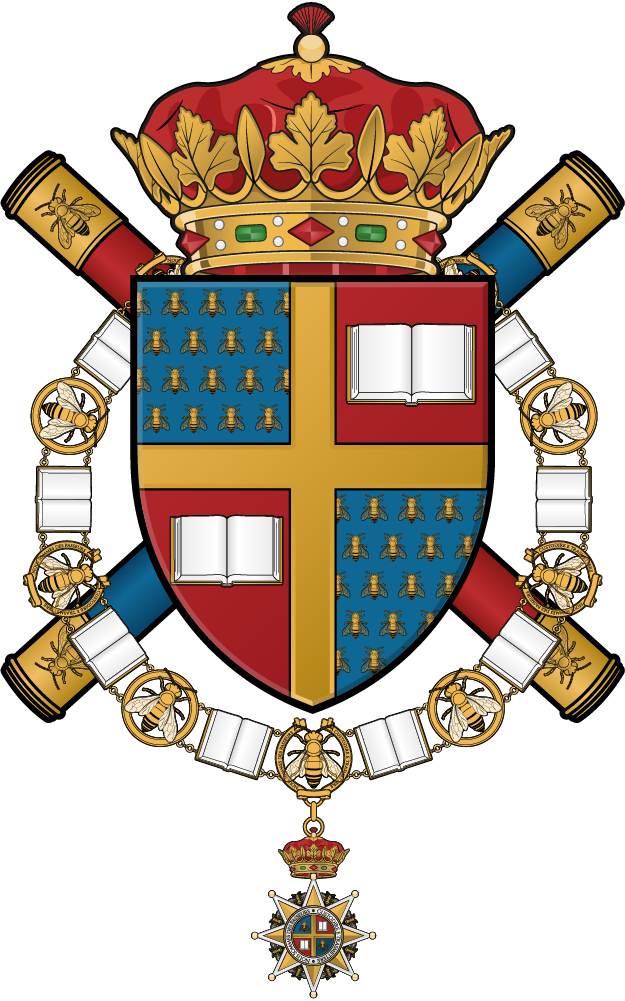
The Armorial of the Bee is a registered international association dedicated to the art and science of heraldry, with a special focus on the bee — one of the most ancient and noble charges in European armorial tradition.
Founded to bring together heralds, historians, genealogists, and enthusiasts from around the world, the association maintains a living index of armorial bearings featuring the bee, promotes scholarly research, and fosters a vibrant international community through its publications and fellowship programme.
Membership is open to all who share a passion for heraldic tradition. The association awards grades of fellowship — from Active Member to Master — recognising contribution, scholarship, and service to the heraldic arts.
The bee has occupied a singular place in heraldry since the earliest codifications of armorial bearings. Associated with royalty, industry, immortality and divine providence, the bee transcended purely decorative use to become one of the most eloquent charges in the heraldic lexicon.
From the Merovingian golden bees unearthed in the tomb of King Childeric I (c. 481 AD), to Napoleon's adoption of the bee as an imperial emblem in deliberate preference to the Bourbon fleur-de-lis, the story of the bee in heraldry is inseparable from the great currents of European history.
The Barberini family — whose most celebrated member, Maffeo Barberini, became Pope Urban VIII — bore Azure, three bees or. These golden bees on blue became one of the most recognised devices of the Counter-Reformation, adorning Saint Peter's Basilica and the Palazzo Barberini alike.
Browse the Index ArmoriumSeven dimensions of meaning across cultures and centuries
The bee has stood for royal authority since antiquity. Pharaonic Egypt used the bee as a title of the Lower Kingdom ruler. Merovingian kings were buried with golden bees as symbols of kingly virtue.
The bee hive became synonymous with productive labour and civic virtue from the Renaissance onwards. Guild arms and municipal devices frequently incorporate bees to signify a hardworking community.
In classical and Christian tradition, the bee represented the soul. The belief that bees did not die but merely departed gave the creature its association with resurrection and eternal life.
According to ancient legend, bees settled on the lips of Plato and Pindar in infancy, foretelling their eloquence. Hence bees appear in the arms of scholars, poets and orators.
The hive as a model of ordered society fascinated political philosophers. From Aristotle to Virgil to Mandeville, the bee colony provided an allegory of just government under a virtuous ruler.
See examples in the Index →The bee's role in the natural cycle — pollinator, honey-maker, wax-producer — placed it as an emblem of divine providence and the sustaining order of creation in both secular and ecclesiastical heraldry.
Talented creators recommended by the Armorial of the Bee
We maintain a curated directory of gifted heraldic artists from around the world — painters, illuminators, and digital creators who share our commitment to the art and tradition of heraldry.
🎨 Discover Our Heraldic Artists